Alaska license plates come in three standard designs and a long list of specialty options, and the choice affects both the look of your vehicle and what you pay at the DMV. The gold and blue Last Frontier plate remains the default, but the grizzly bear and fireweed designs cost a few dollars more. Drivers switching from another state need to know the single rear plate rule before they order. This page describes each design, the real fees and the stages to get the right plate.
Alaska license plates are issued by the Division of Motor Vehicles, and most standard plates arrive with your first registration at no extra plate fee. Specialty, military and university designs carry their own charges, and some require proof or a completed form. Replacement and transfer rules differ from the lower 48, especially for standard plates that cannot move to a new owner. The sections below break down costs, paperwork and typical errors so you can order once and avoid a second trip.
How to Get Alaska License Plates
The stages depend on whether you are registering a car for the first time, bringing a vehicle from another state or adding a specialty design. Each path uses a different form, and the order matters. Start with the registration, then add the plate type you want.
Register a Vehicle in Alaska
Alaska Statutes require a title application within 30 days of buying a vehicle. The registration itself can be handled at any DMV or partner office, or by mail. Bring the signed title or manufacturer certificate, a bill of sale, proof of insurance, a VIN inspection and photo identification. The standard plate and tabs come with the registration, so there is no separate plate order for a first-time passenger vehicle. Registration fees vary by vehicle class and weight, and they are charged on a two-year cycle for most passenger cars. The design you pick can add a plate charge, and the fee table on this page lists each option.
Official source: https://dmv.alaska.gov/vehicle-services/general-vehicle-registration/
Official source: https://dmv.alaska.gov/vehicle-services/new-vehicle/
Documents You Need
Alaska asks for the same core packet at every office. Bring originals and one copy of each document so the clerk can keep a set.
- Signed title or manufacturer certificate of origin.
- Bill of sale with the purchase date and price.
- Proof of Alaska insurance that meets the state minimum limits.
- VIN inspection, completed at the office or by an authorized inspector.
- Photo identification for every owner named on the title.
- Lien release or lender information when a loan is active.
- Form 803 and the proof documents for a specialty plate.
Mail submissions need the same packet plus a check or money order. Keep a copy of everything and the tracking number. A missing signature on the title is the most usual reason a packet is sent back, so check both the front and back before you mail it. Download the current versions from the DMV forms page and confirm the office or mail address before you send the packet.
Official source: https://dmv.alaska.gov/forms/
Move to Alaska With an Out-of-State Vehicle
Drivers who establish residency or start work in Alaska must register within 10 days of entering the state or beginning employment. Non-residents can operate a vehicle for up to 60 days on a valid registration from another state. Bring the out-of-state title, proof of insurance, a VIN inspection and identification. If a lender holds the title, the DMV can help with a title request. Alaska issues one rear plate for passenger vehicles, so the front plate from your old state does not carry over. Remove it before the inspection, keep it for your records and mount the new Alaska plate on the rear bumper. Commercial vehicles over 10,001 pounds still need a front plate. Confirm the document list before you visit an office. The registration source above covers the office and mail options.
Apply for a Specialty Plate
Specialty, military, university, disability, historic and farm plates use a separate application. Complete Form 803, attach the proof listed for that design and submit it online, by mail or at a DMV office. Some designs need a membership card, a service record, a medical certification or a vehicle inspection. Plates are made to order, so allow extra time before the tags expire. Browse the full catalog on the Alaska DMV plate page, then use the matching official page for proof details. The forms page holds the current PDFs, including Form 814 for a plate release and Form 861 for a disability certification. Send the packet to the address on the form or use the online service linked from the plate page. Keep a copy of every document. If a design is out of stock or being redesigned, the DMV will tell you the expected issue date.
Official source: https://dmv.alaska.gov/vehicle-services/license-plates/
Official source: https://dmv.alaska.gov/media/mwmblbsm/803.pdf
Alaska License Plate Types
Alaska groups plates into three standard designs, a set of specialty designs and a group of qualification plates for military service, disability, historic vehicles, farms and commercial use. Each group has its own fee and proof rules.
Standard Gold and Blue N Gold
The gold plate with blue lettering has been the default passenger design since 2010. It carries the words Last Frontier and the state flag colors, with a reflective background and an embossed serial. The blue and gold version uses the same layout with a darker field. Both use the same renewal cycle and the same replacement process.
Grizzly Bear Plate
The standing grizzly bear design returned in 2015 and repeats the artwork of the 1976 bicentennial plate. It is a standard option with no extra plate fee, which makes it the most popular alternative to the gold design. The bear plate uses the same ABC 123 serial format and the same replacement process.
Fireweed Arts Plate
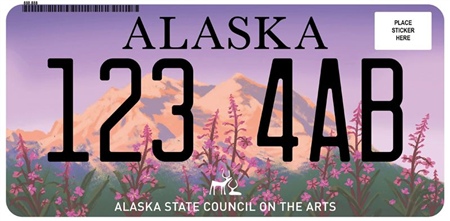
The fireweed design replaced the aurora arts plate in August 2024. It shows fireweed and Denali under a purple sky and supports the Alaska State Council on the Arts. The arts plate uses the ABC 123 serial format, with its own letter series.
Specialty and Support-Based Plates
Support plates raise money for a cause and carry an initial fee plus, in some cases, a renewal charge. The list includes.
- Alaska Children’s Trust: supports the Alaska Children’s Trust.
- Blood Bank of Alaska: supports the Blood Bank of Alaska.
- Breast Cancer Awareness: supports cancer screening.
- Choose Life: supports adoption.
- National Rifle Association: supports youth shooting programs.
- Pro-Family, Pro-Choice: supports the Alaska Children’s Trust.
- Support Our Troops: supports Alaska troops and families.
Fraternal and membership plates require proof of membership. The same rule applies to firefighter and EMS plates for active, former or volunteer crews.
Military and Veteran Plates
Alaska offers branch plates for six services, and each uses the same application.
- Air Force
- Army
- Coast Guard
- Marines
- Navy
- Space Force
National Guard and unit designator plates are also available. A veteran commemorative plate can be ordered with a personal combination. Former Prisoner of War, Purple Heart, Pearl Harbor Survivor and Gold Star Family plates need verification. The Laos veteran plate is available to qualifying veterans.
University of Alaska Plates
Four campus designs support higher education.
- University of Alaska Anchorage (UAA)
- University of Alaska Fairbanks (UAF)
- University of Alaska Southeast (UAS)
- Prince William Sound College (PWSCC)
A portion of each plate charge goes to the campus. The 2025 UAS design features artwork by Crystal Worl and shows a whale fluke in Southeast waters.
Disability Plates
Disability plates use the same renewal cycle as standard plates. Parking privileges require a completed Form 861 and medical certification. A disabled veteran plate can include parking privileges, or it can be issued without them when the service-related disability is 50 percent or more. The parking credential and the plate design are separate approvals.
Historic and Collector Plates
Alaska offers two collector categories, split by vehicle age and modifications.
- Historic vehicle: at least 30 years old and driven for exhibitions.
- Custom collector: models built before 1949 and modified for street use.
The vehicle must meet the safety equipment rule for its class, including hydraulic brakes and seat belts.
Commercial, Trailer and Farm Plates
Commercial vehicles over 10,001 pounds need a front plate and a rear plate. Trucks, trailers, motorhomes and farm vehicles each fall into their own registration class. Farm plates are limited to vehicles that carry farm products or supplies. Trailers use a single rear plate.
Plate Sizes and Materials
Alaska plates measure 12 inches by 6 inches, the standard size used across the country. The face is aluminum with a reflective layer, and the serial is embossed so it can be read at an angle. Two mounting holes sit at the top, and a frame or bracket holds the plate against the bumper. The reflective layer is what makes a plate visible at night. It makes the plate fragile at the edges, where road grit and repeated washing lift the film. A plate that has lost its reflectivity can fail a traffic stop even when the serial is clear.
- Passenger and truck plates use the 12 by 6 inch size.
- Motorcycle plates are smaller and use their own serial format.
- Trailer plates are the same size as passenger plates.
- Sample plates use the standard size and carry the word SAMPLE.
The rear plate sits close to the bumper on most cars, so a thick frame can hide the tabs. Check the fit before you tighten the screws. A plate that rattles against the bumper will wear through the reflective layer at the mounting holes. The aluminum face bends before it cracks, so a light impact can leave a crease that distorts the serial. A crease in the middle of the plate is a usual reason for a replacement order. Store a spare plate flat, not upright against a wall, and keep the mounting screws in a bag with the tabs. Use the two mounting holes and a stainless screw with a nylon washer. A screw that is too long can crack the plate or scratch the bumper, and a missing screw lets the plate flap at highway speed.
Standard vs Specialty Alaska Plates
The table below shows the practical difference between the three standard designs and the specialty group.
| Feature | Standard plates | Specialty plates |
|---|---|---|
| Designs | Gold, blue and gold, grizzly bear, fireweed | Cause, military, university, disability, historic, farm, fraternal |
| Proof required | None beyond registration | Service record, membership, medical form or vehicle inspection |
| Transfer to another owner | No | Yes, with a release form |
| Best for | Everyday passenger vehicles | Drivers with a cause, affiliation or qualifying vehicle |
Standard plates stay with the vehicle when it is sold. Specialty plates belong to the person, so the seller removes them and the buyer registers a new plate. This single difference describes most of the confusion at the counter. A standard plate cannot be moved to another vehicle, even when the same person owns both. Specialty plates can move to a new vehicle, and some categories skip the transfer charge. The DMV lists disability, disabled veteran, Gold Star Family, Prisoner of War and Pearl Harbor Survivor as exempt from the transfer charge. The fee gap is small at the standard end and wide at the cause end. The design you choose changes the total. Standard designs add nothing to the registration, and cause plates carry their own charge. Renewal can change the math: some cause plates charge every cycle, and the rest of the specialty list does not. Compare the two-year total before you pick. Eligibility matters more than price for military, disability and historic plates. A design can still require a service record, a medical form or a vehicle inspection, and a missing document delays the order by weeks.
Alaska License Plate Fees
These are the current plate fees from the Alaska Division of Motor Vehicles. Registration and title fees are charged on top and depend on vehicle class and weight.
| Plate | Initial | Renewal | Replacement |
|---|---|---|---|
| Standard gold, blue and gold, grizzly bear | $0 | $0 | $5 |
| Fireweed arts plate | $3 | $0 | $8 |
| Alaska Children’s Trust | $100 | $0 | Varies |
| Blood Bank of Alaska | $50 | $50 | Varies |
| Breast Cancer Awareness | $50 | $0 | Varies |
| Choose Life | $30 | $30 | Varies |
| National Rifle Association | $50 | $30 | Varies |
| Pro-Family, Pro-Choice | $30 | $30 | Varies |
| Support Our Troops | $40 | $40 | Varies |
| UAA, UAF, UAS, Prince William Sound College | $50 | $0 | Varies |
| Air Force, Army, Coast Guard, Marines, Navy, Space Force | $30 | $0 | Varies |
| National Guard, unit designator, Laos veteran | $30 | $0 | Varies |
| Veteran commemorative | $100 | $0 | Varies |
| POW, Purple Heart, Pearl Harbor Survivor, Gold Star Family | $0 | $0 | Varies |
| Disability and disabled veteran | $0 | $0 | Varies |
| Historic, custom collector, farm, firefighter and EMS, amateur radio, Iditarod, fraternal | $50 | $0 | Varies |
| Plate transfer | $5 | – | – |
Specialty plates are made to order, so a replacement can carry the original plate charge rather than a flat amount. Confirm the amount on the DMV plate page before you pay. Registration is the largest part of the bill and the plate fee is small beside it. Passenger cars, trucks, trailers and motorcycles each use a different schedule. The state charges most passenger registrations on a two-year cycle, so the total covers two years of driving.
How Registration Fees Work
Alaska charges registration by vehicle class and weight, not by plate design. A passenger car, a one-ton truck, a travel trailer and a motorcycle each sit in a different class. Most passenger registrations run on a two-year cycle, so the total on the receipt covers two years of driving. The plate charge is a separate line. A standard plate adds nothing, and a specialty plate adds its own initial charge. Title fees, replacement tabs and a lien filing can appear on the same receipt and push the total above the plate price. The table above lists the plate charge for each design. Registration, title and tax lines sit on the same receipt and are set by vehicle class. A used car and a new car with the same design pay the same plate amount, so the design is the one line you control. Keep the receipt with the title so the class and cycle date stay easy to check. Alaska does not base the plate charge on the age of the vehicle or the purchase price. That detail surprises drivers who move from a state that ties plate charges to value.
- Registration covers the vehicle, not the plate design.
- Weight and class decide the base fee.
- Private passenger vehicles do not need emissions or safety inspections.
- A local motor vehicle registration tax can apply in some areas.
- Renewal keeps the same class for the same vehicle.
Alaska does not charge a state sales tax, but a borough or city can add its own tax at registration. Ask the clerk for the breakdown when the total looks higher than the schedule. Keep the receipt with the title, since it shows the class and the cycle end date. A registration that lapses can lead to a citation and a higher reinstatement cost. Renew before the tabs expire, and replace a missing tab as soon as you notice it. The plate and the registration are one record, so a mismatch between them causes problems at a traffic stop.
Alaska License Plate Rules
Alaska has a short list of display rules, and almost every dispute at a traffic stop comes from one of them: the number of plates, the tabs or a frame that hides the state name.
One Rear Plate Since August 2022
Alaska changed the display rule in August 2022. The current split.
- Passenger cars and trucks: rear plate only.
- Commercial vehicles over 10,001 pounds: front and rear plates.
- Motorcycles and trailers: rear plate only.
A decorative front plate is lawful to display as long as the rear plate is the official one and the front item does not copy a state plate. Drivers who keep an old Alaska plate on the front bumper should know that it has no registration value.
Display, Tabs and Frame Rules
The plate must be readable from a normal distance. Four checks cover most stops, and each one takes a minute.
- Mount the plate upright and keep the face flat.
- Keep the month and year tabs visible in the marked corner.
- Clear snow, mud and ice from the surface.
- Use a frame that leaves the state name, the serial and the tabs exposed.
A Z sticker marks permanent registration for qualifying vehicles. Do not stack old tabs on top of new ones. A plate with a bent corner or peeling reflective film can be rejected at inspection.
Transfer and Surrender
Standard plates are not transferable. When a vehicle is sold, the plate stays with the buyer and the new owner registers it. Specialty plates can move to another vehicle, and the person releasing the plate signs Form 814. The new owner then files a vehicle transaction application. Surrender a plate when the DMV asks for it or when you leave the state and cancel the registration. Mail the plate to the address on the form or hand it in at an office. Keep the receipt until the registration record shows the plate as returned.
Alaska Plate Numbers and Formats
Passenger plates use three letters followed by three numbers, such as FAB 170. The state started the current ABC 123 series in January 2010 and has moved through several prefixes since then, including BAA, DJY and ERU. Each prefix marks a block in the issue order. The serial is embossed, not printed, and the letters are spaced for plate cameras. Some letters are skipped to avoid confusion with numbers. A plate that reads like a word or a name can still be a standard issue, which is why the prefix matters more than the pattern.
- ABC 123 is the standard passenger format.
- Prefixes change as a series runs out, not on a calendar schedule.
- Trailers, trucks and motorcycles use separate formats.
- The Z sticker means permanent registration, not a different serial.
The first letter group in a series can tell you roughly when a plate was issued. A BAA plate came before a DJY plate, and an ERU plate came later. Collectors use the same order to date a plate. A prefix does not reset at the start of a year. The DMV works through a block of serials and moves to the next prefix when the block runs out, so two plates bought in the same month can carry different prefixes. That detail matters to collectors and to anyone matching a plate to a registration record.
Alaska License Plate History and Design Changes
Alaska has changed its passenger plate design several times since statehood, and each change left a group of plates on the road that still renew today. The timeline below covers the designs a driver is most likely to see, inherit or spot in a parking lot.
The First Alaska Plates
Alaska issued its first license plates in 1921, decades before statehood. The early tags were simple metal plates with stamped numbers, and few survive. A 1921 plate is the rarest Alaska issue in the collector market, with only a couple of examples known today. Later territorial plates used short number blocks and plain lettering, and most were scrapped when the vehicle changed hands. The territorial period ended in 1959, and the new state kept the same basic layout for several years. Plates from the early 1960s are easier to find than the 1921 tag, but clean examples still draw attention at plate meets.
The Totem and the Grizzly
The 1966 plate carried a totem pole design and became one of the most recognizable Alaska issues. It replaced the plain territorial style with artwork that reflected the state. In 1976 the state marked the national bicentennial with a standing grizzly bear, and that bear became a collector favorite. The grizzly artwork returned on the 2015 standard plate, which made the old design easy to find on new cars. The 1976 original and the 2015 reissue use different serials and different reflective materials, so a close look tells them apart.
Centennial and Last Frontier
Alaska marked the 1998 statehood anniversary with a centennial plate that won a national plate award. The run ended in 2004, and the state moved to the Last Frontier design in 2005. That gold and blue plate became the default passenger issue on January 1, 2010. The current ABC 123 serial series started with the Last Frontier change. Plates from the first years of the run carry early prefixes, and the prefix moved forward as the series ran out rather than on a calendar schedule.
Aurora and Fireweed
A public vote chose an aurora design for the first arts plate in 2018. More than 17,000 residents took part, and the winning artwork came from a student at the University of Alaska Anchorage. The aurora plate raised money for arts programs and stayed in issue until 2024. The arts plate changed again in August 2024, when the fireweed design replaced the aurora base. The new plate shows fireweed and Denali under a purple sky and keeps the same arts fund. Aurora plates remain valid and renew as normal, so both designs share the road today.
Plate Care and Replacement
A damaged plate should be replaced before it fails an inspection. Cracks, missing reflective film, a bent face or a serial that cannot be read all qualify. Replacement charges depend on the design.
- Report a stolen plate to local police and keep the case number.
- Apply for a duplicate through the DMV replacement page or by mail.
- Return the damaged plate when the form asks for it.
- Update the registration record before you drive with the new plate.
- Check the tabs after the swap and replace a missing tab at the same time.
Clean the plate with soap and water, not an abrasive pad. Road salt and gravel chip the reflective layer, and a pressure washer can lift the film at the edges. A soft brush and a rinse keep the serial readable through the winter.
Frequently Asked Questions
These are the questions drivers ask most often at the counter and on the phone. Each answer covers the rule, the fee and the form that applies, so you can check the point that matters before you order a plate or plan a visit. The answers reflect current DMV fees and the single rear plate rule that took effect in 2022.
Do Alaska vehicles need a front plate?
No. Passenger vehicles need one rear plate. Commercial vehicles over 10,001 pounds need a front plate as well. The rule changed in August 2022.
How much does a standard Alaska plate cost?
Standard designs carry no plate charge at first issue or renewal. A replacement carries its own charge, and the fee table on this page lists each design.
Which plates need proof before I can order?
Military, disability, historic, farm, fraternal and amateur radio plates need proof. University plates do not need proof beyond the fee. The application form lists the exact document for each design.
Can I move a plate to another vehicle?
Standard plates cannot move. Specialty plates can move, and some categories skip the transfer charge. The person releasing the plate signs Form 814.
What should I do with a damaged plate?
Order a replacement before the plate fails inspection. Replacement charges depend on the design. Return the old plate when the form asks for it and check that the new tabs match the registration.